The two most popular royal residences near Paris sit on opposite sides of the capital, and getting between them without a car is harder than most people expect.
No direct train runs from Fontainebleau to Versailles, so if you're visiting both the Château de Fontainebleau and the Palace of Versailles, you'll need to plan for that gap.
The guide includes practical ways to get from one point to another on this route: combining Transilien and RER services, taking a taxi, using a ride-hailing app, renting a car, or arranging a private transfer that avoids the detour through central Paris.
The route suits day-trippers who want to visit both palaces, business travelers staying in Île-de-France, and families who prefer not to handle their suitcases with two train changes. The road distance is approximately 72 km and, outside of rush hour, the drive takes about 55 minutes.
For those short on time or traveling with luggage, a private transfer from Fontainebleau to Versailles can be completed in a single journey, with one driver and no changes of station.
How Far Is Fontainebleau from Versailles
Fontainebleau is situated approximately 55 km southeast of Paris on the edge of the Forêt de Fontainebleau, and Versailles is about 20 km southwest of Paris, next to the palace grounds.
– The straight road distance is approximately 71.6 km.
– The journey by car takes about 54 minutes if there is no traffic.
- Route: The majority of GPS routing has drivers go up the A6 towards Paris, then continue via the N104 (La Francilienne) or the A10 to get to Versailles, thus avoiding the city centre.
- Effect during rush hour: Both the N104 junction near Versailles and the A6 approach become slower during the weekday commuting periods, causing the journey time to increase by 15 to 30 minutes.
Since Fontainebleau is situated to the southeast of Paris and Versailles to the southwest, the quickest route on purpose involves going around the city rather than passing through it; this is the same reason why public transport between the two places is so indirect — the rail lines in Île-de-France spread out from the central Paris stations and not around the suburbs.
What Are the Transfer Options from Fontainebleau to Versailles
The prices on this route are more variable than they are on an ordinary point-to-point transfer since there is no single direct service available for comparison; the details below explain how it actually works, not just give the price.
Train (Transilien R + RER C, via Paris)
The rail route is the only option, though it isn't direct; it works, but you'll need to walk or take the metro in Paris to transfer between two train lines.
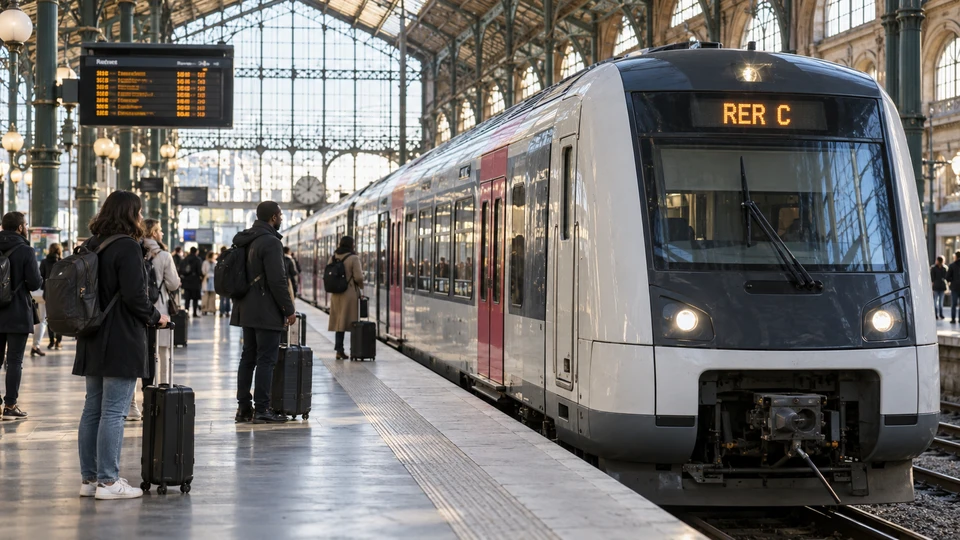
How it works: Take Transilien Line R from Fontainebleau-Avon station to Paris-Gare de Lyon. The trip takes about 40 minutes. Cross the city center on Métro Line 14 to reach a station connected to RER C. Then ride RER C to Versailles-Château-Rive-Gauche. This part takes another 35 to 40 minutes.
– The journey takes about one hour forty-five minutes to two hours fifteen minutes from the door to the platform, covering the walk and the waiting time between trains.
– Comfort: It can be managed if you use a backpack, but carrying suitcases up the metro stairs and making two changes involves a great deal of difficulty.
– Regarding luggage, it's acceptable to carry one bag per person, but it becomes more difficult when golf clubs, strollers, or several large suitcases are involved.
- Suitable for: Individuals traveling alone or those who are students on a strict budget and are at ease with using the Paris metro.
- The price is about €10 to €15 per passenger for the combined one-way tickets, or a Mobilis Zone 1–5 day pass costing approximately €20 to €22, which also includes metro use.
Pros
- Cheapest option per person
- Trains run roughly every 30 minutes on Line R throughout the day
Cons
- No direct connection — two changes and a walk through central Paris
- Total journey time can double the driving time
- Awkward with heavy luggage
No direct coach or bus connects Fontainebleau and Versailles, as the only available bus services operate within each town.
You can check official train schedules and connections on the SNCF timetable page
Private Transfer
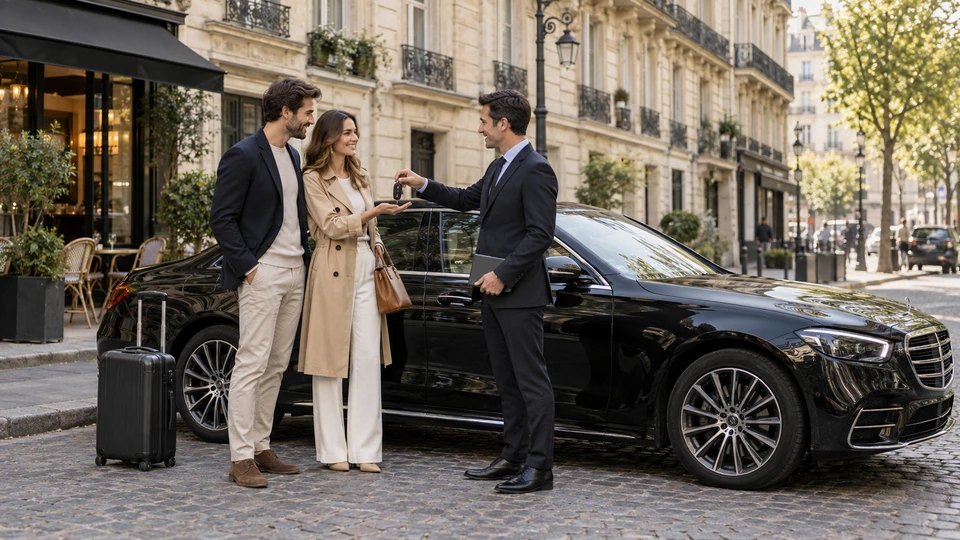
A car booked in advance will meet travelers at the Château de Fontainebleau, a hotel, or the train station, then take them straight to the entrance of the Versailles palace or to their next destination.
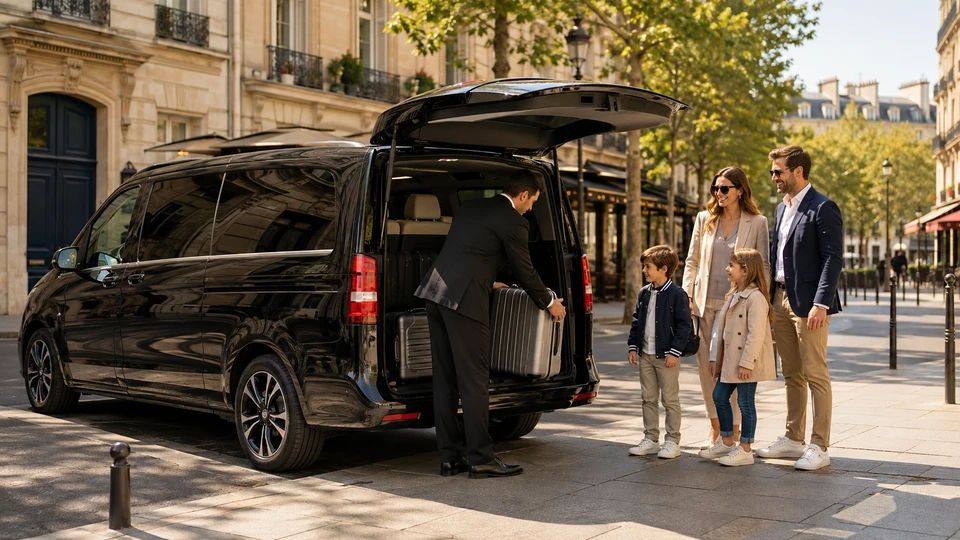
Here's how it works: The driver takes the A6/N104 route directly, makes adjustments according to the current traffic conditions, and then checks the price before picking up the passenger.
– The journey takes about 55 minutes under ordinary conditions, but is closer to 75 to 85 minutes during rush hour.
– Comfort: You only need one car, with no need to make transfers and no stairs when carrying luggage.
- Luggage: If requested at the time of booking, larger vehicles can carry several suitcases, golf bags, or strollers.
- Suitable for: People who are part of a family, groups consisting of three or more people, travelers who have a flight or tour that is booked on a fixed schedule, and those who are moving between the two chateaux on the same day.
- Price basis: A flat rate will be agreed upon for the vehicle before the trip and this will not depend on traffic delays.
Pros
- Fixed price agreed in advance
- Direct route, no transfers
- Pickup at the exact address, including hotels and the palace gates
Cons
- Costs more per person than the train for solo travelers
- Requires booking ahead rather than walking up
👉 Book your private transfer from Fontainebleau to Versailles. Get a set price before you travel.
Taxi
A regular French taxi can make the journey, but the regulated fare system doesn't apply to this route.
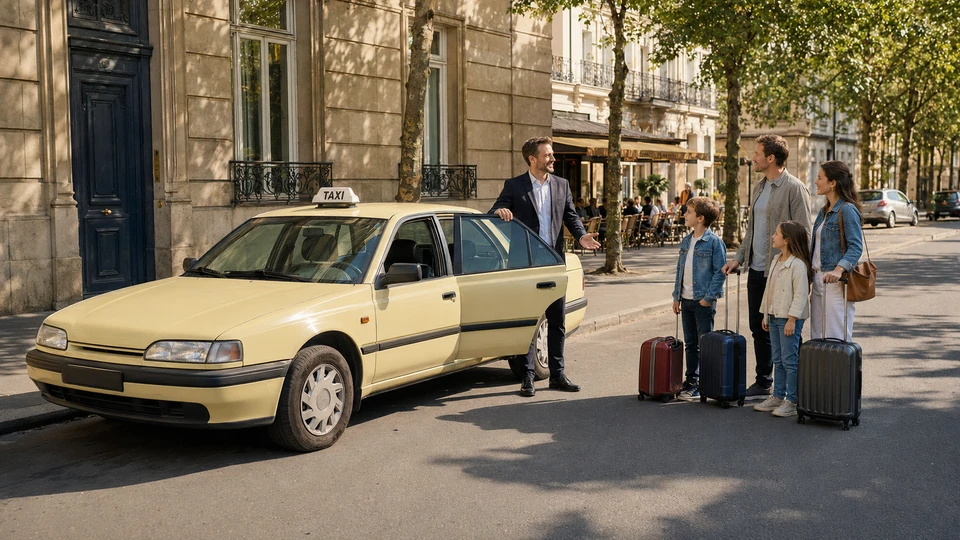
How it works: Taxis charge a fare that is displayed by a meter, comprising a base charge and a rate for each kilometre.
- Travel time: This is about the same as that of a private transfer, taking approximately 55 minutes to just over an hour.
– Comfort: It is a standard sedan and does not have the option to select a preceding vehicle.
– Regarding luggage, the amount allowed is only that which will fit in a standard trunk, unless a bigger taxi is asked for.
- Suitable for: People who are going on last-minute, impromptu trips where it's not possible to book in advance.
- The pricing is based on a metered system, including a legal surcharge which in this case is relevant.
French taxi fare rules allow drivers to charge up to twice the per-kilometer rate when a journey falls outside the area where they are registered and involves an empty return trip—this applies to a trip from Fontainebleau to Versailles. However, this additional charge is seldom noted and may cause the metered fare to exceed the previously agreed-upon price for a private transfer covering the same distance.
Pros
- No advance booking needed
- Widely available near both train stations
Cons
- Out-of-zone and return-trip surcharges can double the per-km rate
- Final price isn't known until the meter stops
- Fewer taxis serve Fontainebleau than central Paris, so waiting is common
Ride-Hailing Apps
Uber and Bolt are available throughout the wider Paris area, but their services become less available near Fontainebleau.
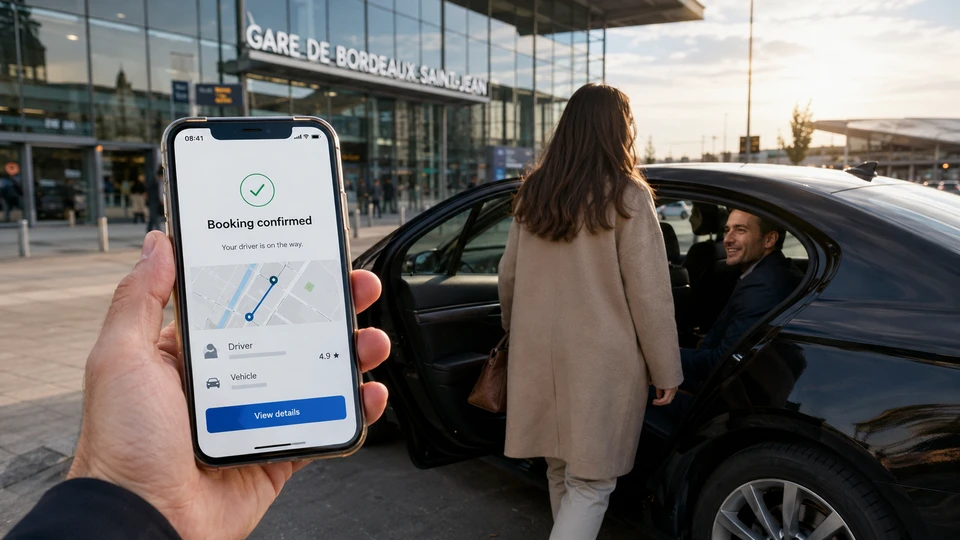
– How it works: You can order a car using the app, and the prices are dynamic and determined by demand.
- Travel time: Similar to a taxi or private transfer, if traffic allows.
– Comfort: The vehicle provided is standard for a passenger car, although the driver and the car may differ depending on request.
– The luggage allowed is dependent on the class of vehicle chosen.
- Suitable for: Those who currently use the app and are willing to be flexible regarding both time and price.
- Price basis: The prices are dynamic and increase during peak hours or when there are few drivers close to Fontainebleau.
Pros
- Familiar app-based booking
- Live driver tracking
Cons
- Fewer drivers available near Fontainebleau than in central Paris, meaning longer wait times
- No fixed price until the ride is requested
- No guarantee of a return car from Versailles later the same day
Car Rental
Self-driving suits people who plan to see more of the area than just those two towns.
– How it works: Retrieve the hire car from Fontainebleau or from one of the nearby stations and then drive along the direct A6/N104 route.
– The journey will take about 55 minutes, together with the time needed to find parking at each location.
- Comfort: Having complete control over the schedule and over any stops en route, for example at Barbizon.
– Regarding luggage: the only limitation is the capacity of the car's trunk.
- Suitable for: People who visit Fontainebleau and Versailles and also include other places in Île-de-France on their trip.
- The price is based on the daily rental rate together with fuel—about €10 to €11 for petrol to cover the one-way journey—and also includes parking at both locations.
Pros
- Flexible schedule, no fixed pickup window
- Useful for a multi-stop itinerary
Cons
- Parking at the Château de Versailles is paid and can fill up on weekends
- Requires navigating unfamiliar interchanges for first-time visitors
- Adds car return logistics at the end of the trip
Comparison of Transfer Options
| Option | Time | Comfort | Luggage | Direct | Cost (one-way estimate) |
|---|
| Train (Transilien R + RER C) | 1h45–2h15 | Moderate | Limited with large bags | No, 2 changes | €10–15 pp, or ~€20–22 day pass |
| Private transfer | 55–85 min | High | Good, book ahead for extra bags | Yes | Fixed rate, confirmed at booking |
| Taxi | 55–70 min | Moderate | Standard trunk | Yes | Metered, higher with out-of-zone surcharge |
| Ride-hailing app | 55–75 min | Moderate | Depends on vehicle class | Yes | Dynamic, varies by demand |
| Car rental | ~55 min + parking | High | No restriction | Yes | Daily rate + fuel + parking |
Best Option for Different Travelers
- For families having children: a private transfer eliminates the need to manage strollers when using the train stairs and metro platforms.
- Couples: It depends on whether you are working with your budget or your time whether to take the train or a private transfer.
- If you book a private transfer, the cost per person will be less than that of three or four individual train tickets.
- For budget travelers: The combination of the Transilien R and the RER C is the most inexpensive choice, provided that the extra time and the need to change trains are acceptable.
- For business travelers, a private transfer ensures that the schedule between meetings remains predictable.
- If you have a lot of luggage, a private transfer or taxi will allow you to skip the stairs at Gare de Lyon and the metro interchange.
- For those visiting Paris for the first time, a private transfer eliminates the necessity of dealing with an unfamiliar train and metro system as well as managing your luggage.
- For those who travel late at night: both the Transilien R and the RER C cease their services in the late evening, in which case a private transfer or a taxi should be arranged for travel outside of office hours.
- For travelers who are tight on time: since a private transfer has a fixed pickup time and takes the direct route, the chance of missing their connection is reduced.
- For older travelers: a private transfer or taxi is more comfortable than the train route since there are fewer stairs and no need to change stations.
Why a Private Transfer Is the Most Convenient Option
The main problem is that no direct train is available; all public transport routes go through central Paris and then back out, requiring a station change, a metro ride, and walking time that a direct car trip avoids.
A private transfer involves driving the 72 km in a single continuous journey, with the driver familiar with the A6/N104 route and able to adjust in real time for traffic conditions.
As professional drivers, they are familiar with both pickup points — that is, the grounds of the Château de Fontainebleau and the entrance to the Versailles palace — and have the option of meeting at a hotel lobby or at a station platform.
Fixed pricing: The price is determined beforehand, since on a route involving a taxi that is legally allowed to charge for the return leg it drives there is an issue.
In terms of comfort, passengers will remain in a single seat for the entire 55-minute journey rather than having to change trains twice.
Service available around the clock: transfers that have been pre-booked operate outside the Transilien and RER C service hours, which is relevant for connections in the early morning or in the late evening.
👉 Book your private ride from Fontainebleau to Versailles.
Travel Time by Time of Day
Traffic on the A6 and N104 route changes noticeably throughout the day, so if the timetable permits, time your departure accordingly.
– In the morning (from 7:00 to 9:30 AM), the traffic of commuters coming into Paris from the south increases the journey time by 15 to 25 minutes, particularly around the A6/A86 junction.
- At noon (from 10:00 AM to 3:30 PM): This is closest to the free-flow baseline of about 54 minutes.
- In the evening (from 4.30 to 7.30 PM), the traffic leaving Paris for the Yvelines and Seine-et-Marne departments increases travel time by 20 to 30 minutes on both the A6 and the N104.
- At night (after 9:00 PM): This is the quickest time period, usually taking less than 50 minutes, even though both the Transilien R and the RER C operate less frequently or cease running altogether.
You can arrange a private transfer in advance to match these time slots; you can't book one at the last minute.
Cost Breakdown by Transfer Type
- Train: The price is between €10 and €15 per passenger for the combined Transilien R and RER C tickets, or a Mobilis Zone 1–5 day pass costing €20 to €22, which also includes metro travel between the two lines.
- Private transfer: The cost for the vehicle is fixed and is confirmed before pickup; when travelling with three or four people this generally proves to be cheaper per person than buying individual train tickets since the price does not increase directly in proportion to the number of passengers.
- Taxi: The fare starts at about €4.48 and then adds up to €1.30 for each kilometre, together with a legal surcharge of up to 100% when the journey is outside the driver's area and involves an empty return trip — which is a actual consideration on this particular route.
- Ride-hailing app: It uses dynamic pricing, which is generally comparable to taxi fares during off-peak times but increases during periods of high demand or when there are few drivers close to Fontainebleau.
– For the car rental, you have to pay the daily rental fee together with about €10 to €11 for fuel to cover the one-way journey, as well as parking charges at both the Château de Fontainebleau and the Château de Versailles.
Watch for these hidden costs: return-trip surcharges from taxis, parking fees at Versailles, and surge pricing on ride-hailing services during the weekends of the Grandes Eaux Musicales, since demand for cars leaving the palace increases in the late afternoons.
Tips for a Smooth Transfer Experience
- It's a good idea to book your private transfer in advance, particularly during the weekends around the Grandes Eaux Musicales (from April to October, on Saturdays and Sundays) since both palaces then have larger numbers of visitors and more traffic.
- Select a vehicle that is appropriate for the number of people in your group and your luggage — a standard sedan can comfortably accommodate up to three people along with their bags, while larger groups will need a van.
- Where possible, travel during the midday hours in order to avoid the periods of traffic on the A6 and N104 in the morning and in the evening.
- It is important to check the current traffic conditions before leaving, especially in the area of the A6/A86 interchange.
- Make sure that you have the hotel's address and the driver's contact information ready by the time the pickup is due.
- If you are traveling with young children, ask for a child seat in advance since most operators require notice in order to be able to provide one.
- If you are taking the train, it is advisable to pack light because the connection at Gare de Lyon involves some stairs.
– If you are visiting during the shoulder season, then plan for the possibility of rain; the walk from Fontainebleau-Avon station to the château is almost 3 km in the event that a bus connection is missed.
FAQ
Is there a direct train from Fontainebleau to Versailles?
No, there is no direct rail service connecting the two towns. To get from one to the other, people have to take the Transilien Line R to Paris-Gare de Lyon, then take the metro across the city before taking the RER C to Versailles-Château-Rive-Gauche — the trip takes about two hours, including the change of transport.
What is the time taken to travel from Fontainebleau to Versailles?
By car or private transfer, the journey takes about 55 minutes outside rush hour; by train, allow 1 hour 45 minutes to 2 hours 15 minutes, as the route passes through central Paris with a change en route.
How can I get from Fontainebleau to Versailles at the lowest cost?
The combination of the Transilien R and the RER C is the cheapest option, costing about €10 to €15 per person or about €20 to €22 for a Mobilis day pass; it takes longer and requires two changes.
Is it possible to visit both chateaux in a single day?
Yes, if you start early. You should allow at least six hours for the apartments and grounds at Versailles and two to three hours at Fontainebleau—most visitors either start before 9 a.m. or split their visit over two days.
Does the route from Fontainebleau to Versailles have a toll?
On the most commonly used direct route, taking the A6 and N104, there is no toll on that section under normal routing procedures; however, tolls may still apply depending on the exact route chosen, so it's best to check before driving yourself.
How much does a private transfer from Fontainebleau to Versailles cost?
The price is a fixed rate that is confirmed at the time of booking and depends on both the size of the vehicle and the time of day; unlike a metered taxi, which is allowed by law to charge an extra fee for the empty return journey on this route, it has been agreed in advance.
Is Uber in Fontainebleau?
Uber and Bolt also operate in the area, but because there are fewer drivers in Fontainebleau than in central Paris, the wait for a ride to Versailles can be longer than in the city.
How on earth is one supposed to get from Fontainebleau to Versailles with luggage?
A private transfer or taxi avoids the stairs and metro change involved in the train route. If you have more than one large suitcase per person, book a larger vehicle in advance rather than relying on a standard sedan.
You May Also Like These Transfer Options